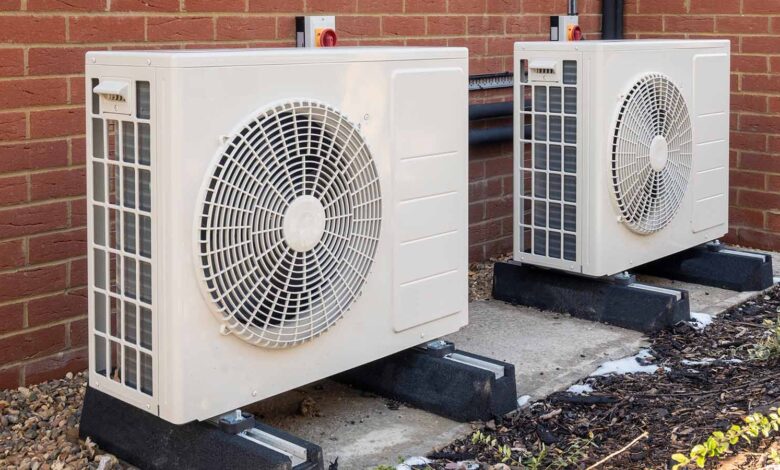
Heat pumps come up a lot in conversations about home heating these days, but plenty of homeowners still aren’t quite sure what they are or how they actually work. Here’s a simple explanation.
The basic idea
A heat pump doesn’t generate heat by burning fuel, the way a gas boiler does. Instead, it extracts heat that’s already present in the outside air, or sometimes the ground, and moves it into your home, even when it’s cold outside. This might sound strange, but the same technology is already in your fridge, just working in reverse. A fridge removes heat from inside and releases it outside; a heat pump takes heat from outside and moves it inside, using a small amount of electricity to make that transfer happen.
The two main types
Air source heat pumps are the most common choice for UK homes. A unit sits outside, similar in size to an air conditioning unit, and draws heat from the surrounding air. Ground source heat pumps use pipes buried in your garden to extract heat from the ground, which stays at a fairly stable temperature year-round, but they need more outdoor space and cost more to install, so they tend to suit larger properties with room to spare.
How it heats your home
Once the heat pump extracts warmth from the air or ground, it uses a compressor to raise that heat to a usable temperature, then circulates it through your home via radiators or underfloor heating, and provides hot water too. It runs on electricity, but because it’s moving existing heat rather than creating it from scratch, it typically produces more heat energy than the electrical energy it consumes, which is what makes it efficient.
Is my home suitable?
Most homes can have a heat pump installed, though good insulation makes a real difference to how well the system performs and how much you pay to run it. Homes with underfloor heating or larger radiators tend to work particularly well, since heat pumps operate most efficiently at lower, steadier temperatures rather than the short bursts of high heat a gas boiler produces.
What about cost and running expenses?
Heat pumps cost more to install than a standard gas boiler, though government grants can offset a portion of this. Running costs vary depending on your home’s insulation and current electricity prices, but heat pumps generally need less maintenance than gas boilers over their lifetime, since they have simpler mechanics and no combustion process to service or repair.
Where to learn more
If you’re a family weighing up whether to make the switch, it helps to see it explained in plain terms, without the sales pitch. Find out what a renewable energy service from GSM entails with their straightforward, family-friendly guide covering exactly this, worth a look if you want more detail before deciding whether a heat pump is right for your home.
Switching from a boiler to a heat pump is a bigger decision than most home upgrades, but understanding the basics is a good first step before getting a proper assessment done on your own property.